
Astrology Today Journal
Trataka: The Ancient Spiritual Practice of Yogic Gazing
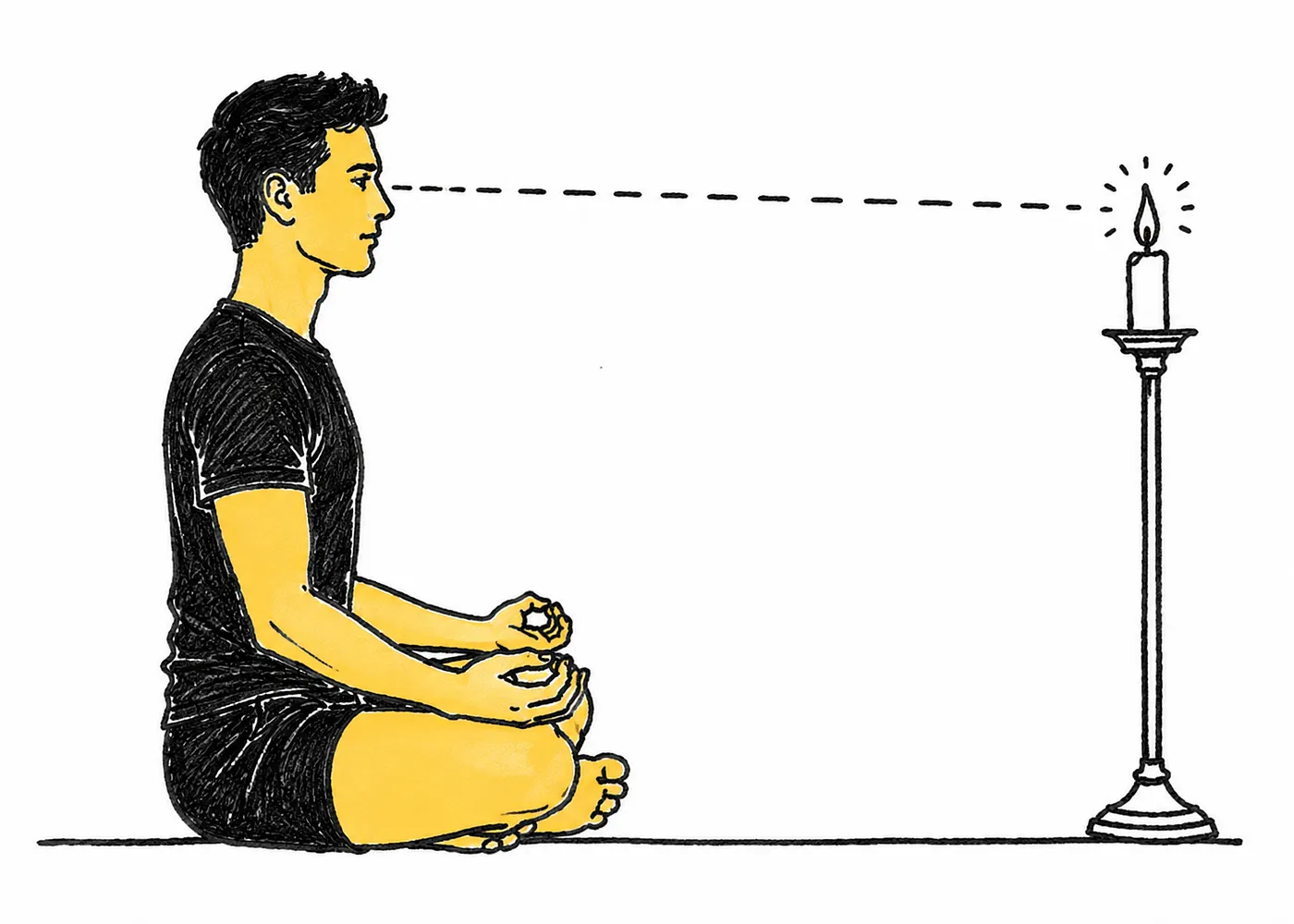
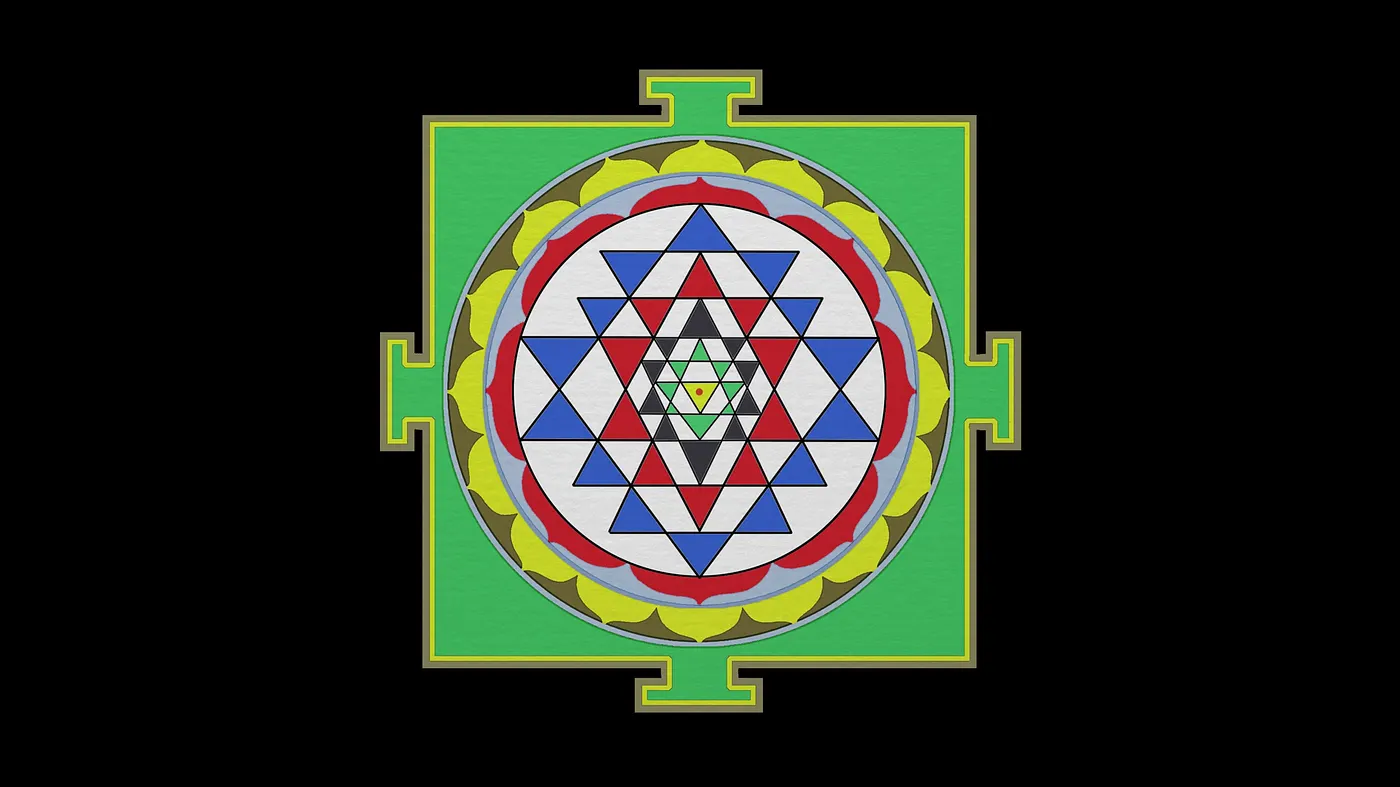
Trataka is an ancient yogic technique that involves gazing at a fixed point for a long period of time. The point at which one gazes can vary widely and may include almost anything, but many practitioners prefer to use a candle’s flame, a mirror, or a mandala’s geometric design.
Daily trataka enhances intuition, sharpens concentration, and, when combined with proper breathing exercises or meditation, helps one achieve a feeling of inner peace almost immediately. In yogic practice, Trataka is said to purify the third eye, a symbolic centre associated with inner vision, clarity, and higher perception. Ancient mystics also equated this with a higher vibrational state.
Trataka and ANS Activation
The autonomic nervous system, i.e., that which governs our automatic responses to stimuli, is made up of two parts: the sympathetic nervous system and the parasympathetic nervous system. The sympathetic nervous system rules our fight-or-flight responses and survival instincts, while the parasympathetic nervous system governs calming responses related to healing, recovery, and restoration of the spirit.
Trataka works by shifting the practitioner from a sympathetic state into a parasympathetic state, reducing stress and moving toward healing and restoration. This may correspond with changes in brainwave activity associated with meditative states, such as alpha-theta brainwave rhythms. These states may help create greater coherence within the nervous system as the sympathetic and parasympathetic branches work in greater harmony, supporting more regulated communication between the brain, heart, and body.
Breathing Techniques
Most people breathe more slowly and deeply during candle gazing without realizing it. Controlled breathing naturally balances the autonomic nervous system, calming anxiety and raising heart rate variability, a marker of emotional and spiritual well-being. A quieted system emits more coherent electromagnetic fields, especially from the heart.
Slow diaphragmatic breathing through the nose is often considered one of the most effective breathing techniques to pair with Trataka. This technique involves breathing slowly through the nose and deeply into the diaphragm. As you breathe, it’s important to deepen your concentration on the flame or fixed point of interest, allowing yourself to enter a more meditative and coherent state of awareness.
Types of Trataka
Trataka Using a Fixed Point
The first method of Trataka involves gazing at a fixed point. The point itself can be almost anything, but it should be visually stable and easy to concentrate on so the mind does not wander during meditation. Many yogic practitioners prefer to use symbols rich in spiritual meaning, including colors believed to produce specific psychological or metaphysical effects, or geometric forms associated with sacred geometry.
Trataka Using a Candle
The second method involves gazing at a candle’s flame. The distance between you and the candle is ultimately up to you, but most practitioners prefer to place the candle on a stand approximately 2 to 3 feet away at eye level. In traditional yogic practice, the flame should remain steady and easily visible without causing physical strain to the eyes or neck. The meditator then focuses intently on the flame without blinking excessively, allowing the mind to gradually become still and single-pointed.
Practicing Trataka with a candle helps stimulate melatonin, serotonin, and circadian rhythm according to some emerging research. In general, research on warm light exposure suggests that naturalistic lighting conditions may influence mood, sleep, and states of alertness in a positive manner. This may be due to activation of the pineal gland and its connection to biophoton transmission.
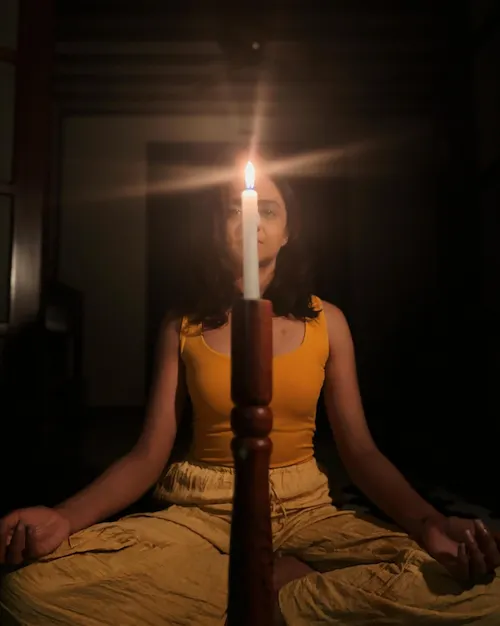
The relationship between the pineal gland and biophoton transmission is a highly speculative but actively discussed topic at the intersection of neuroscience, biophysics, and consciousness studies. Biophotons might be the scientific term used to describe what ancient yogis have called “inner light” for millennia, and which occurs in all living things.
The flickering of a candle also produces a natural alpha-theta brainwave rhythm, which is associated with relaxed awareness, meditative states, and healing. This entrainment (i.e., the syncing of brain rhythms to external stimuli) can help the mind drop into coherence, increasing internal order, which energetically feels like a “higher frequency” state.
Trataka Using a Mirror
Trataka using a mirror, sometimes affectionately called “mirror work,” is the practice of gazing into your own eyes, typically in a calm, meditative state while observing emotions and sensations that may arise. When done with candlelight, the environment becomes even more introspective, creating a sacred or altered state of consciousness. Some would even venture to say that we are more beautiful in candlelight, and so this practice can encourage feelings of self-love and self-appreciation. The words we speak to ourselves, or even think to ourselves while looking into a mirror, can have profound spiritual effects on our emotional well-being.
Facing the self in the mirror activates what is called the Default Mode Network, or DMN for short. This is a neural system involved in self-referential encoding, daydreaming, and autobiographical memory. This is supported by studies using fMRI, which have shown that gazing at one’s own face activates areas of the brain related to identity and memory retrieval. In summary, your brain is literally retrieving your own story and helping you get in touch with your inner self, or remember who you are.
Eye contact — yes, even with yourself — triggers activity in the limbic system, the brain’s emotional centre. Normally, eye contact with others regulates emotions via oxytocin release and social bonding, but with mirror work, this can help self-regulate emotions like shame, grief, or feelings of unworthiness. This explains why some people cry during mirror meditation: it’s a form of emotional metabolizing. It is also not uncommon to experience feelings of discomfort or trembling in the beginning phases of Trataka, but with practice, these are soon replaced with feelings of ease, acceptance, and confidence in the self.
How to Practice Trataka at Home
If you are interested in trying Trataka on your own, you can follow this simple method.
- Place a candle on a candlestick or candleholder and make sure it is secure.
- Place the candle on a surface in front of a mirror that is at least three feet tall and at least two feet wide.
- Sit in a dark room facing the mirror, keeping the candle at a safe distance from your body, clothing, curtains, or anything flammable.
- Light the candle.
- Start your breathing technique by breathing deeply through your nose for 6 seconds, allowing your belly to expand fully. Hold your breath for 6 seconds, then exhale for 6 seconds until you feel your belly pull completely inward. Then, hold the breath out for 6 seconds before repeating the cycle.
- Fix your gaze upon the candle’s flame while continuing the breathing exercise. Feel your own presence in your periphery.
And that’s it! You are now practicing Trataka like a true yogi.
Alternatively, at some point during your meditation, you may decide to place the candle to the side and focus solely on the center between your eyes. Use the space between your eyebrows as a fixed point and continue the practice just as you did with the candle’s flame. You can continue doing this for as long as feels comfortable, or until you begin to feel the spiritual benefits that Trataka meditation has to offer.
If you are someone who is uncomfortable with psychedelic experiences or has had negative experiences with psychedelics in the past, then Trataka may not be suitable for you. This is because the subtle shadows and movement of candlelight can also create mild pareidolia, such as the perception of faces or patterns, which enhances the mythic or symbolic feeling of the practice, but may trigger episodes in those with a history of psychosis.
Works Cited
- Blume, C., Garbazza, C., & Spitschan, M. (2019). Effects of light on human circadian rhythms, sleep and mood. Sleep Medicine Reviews, 44, 108–118.
- Bonmati-Carrion, M. A., et al. (2014). Protecting the Melatonin Rhythm through Circadian Healthy Light Exposure. International Journal of Molecular Sciences.
- Walker, W. H., et al. (2020). Circadian rhythm disruption and mental health. Molecular Psychiatry.
- Tähkämö, L., Partonen, T., & Pesonen, A.-K. (2019). Systematic review of light exposure impact on human circadian rhythm. Chronobiology International, 36(2), 151–170.
- Zaccaro, Andrea, et al. “How Breath-Control Can Change Your Life: A Systematic Review on Psycho-Physiological Correlates of Slow Breathing.” Frontiers in Human Neuroscience, vol. 12, 2018.
- Apps, Matthew A. J., and Manos Tsakiris. “The Different Faces of One’s Self: An fMRI Study into the Recognition of Current and Past Self-Facial Appearances.” PLoS ONE, vol. 8, no. 7, 2013.